
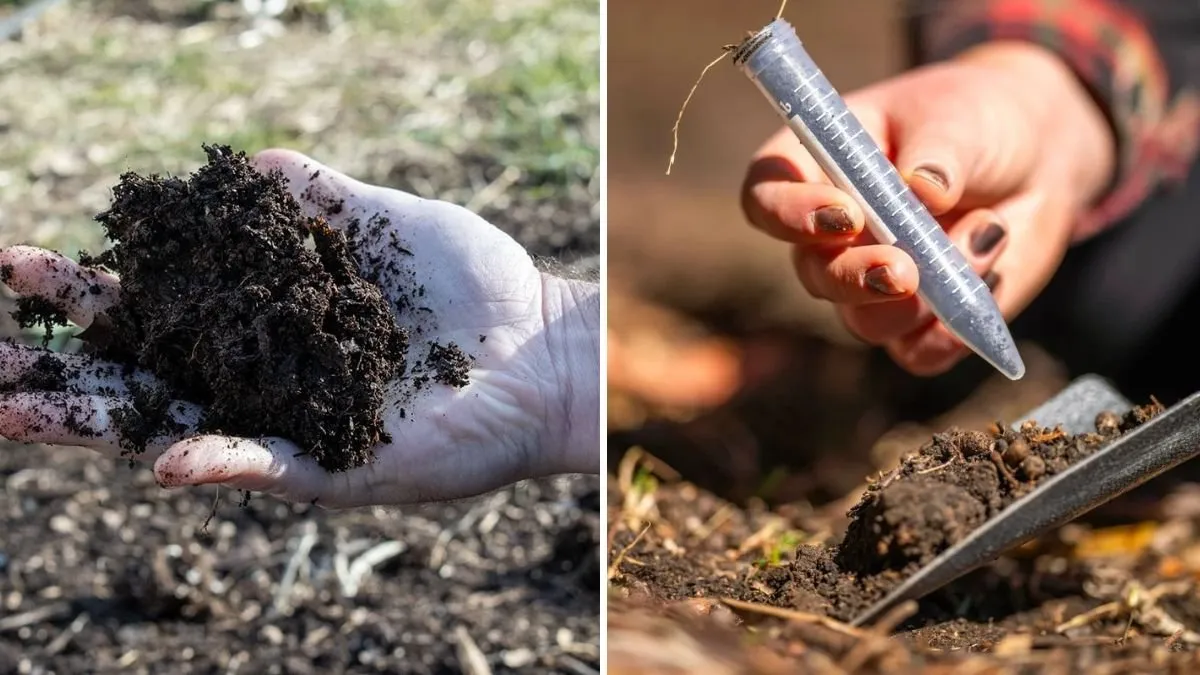
A healthy garden begins with healthy soil. Even if you water regularly and provide good sunlight, poor soil quality can limit plant growth, reduce yields, and attract pests. Soil is the foundation that supports every root, supplying nutrients, air, and water. When you understand your soil’s texture, drainage, pH, and life activity, you can tailor your gardening approach for stronger, more resilient plants. The good news is that you can test your soil right at home with simple, affordable methods that reveal everything from acidity to fertility.
How Can You Check Your Soil’s pH Level at Home?
Soil pH determines how acidic or alkaline your soil is on a scale of 0 to 14. Most vegetables and flowers prefer a range between 6 and 7, slightly acidic to neutral. When pH drifts too high or low, plants struggle to absorb nutrients even if you add fertilizer. Common signs of imbalance include yellowing leaves, poor fruiting, and stunted growth. You can use a store-bought pH test kit or a simple home method. Add vinegar to one soil sample—if it fizzes, the soil is alkaline. Add baking soda mixed with water to another—fizzing means it’s acidic. If your soil is acidic, add lime to raise the pH. If it’s alkaline, mix in compost or elemental sulfur to lower it. Adjust slowly to avoid shocking your plants.
How Do You Identify Your Soil Type and Texture?
Soil texture influences how your garden retains water and nutrients. Sandy soils drain quickly but hold few nutrients, while clay soils trap water and can suffocate roots. Loamy soil, a balance of sand, silt, and clay, is ideal for most plants. You can identify your soil type through a jar test. Fill a clear jar with one-third soil and two-thirds water, shake it well, and let it settle for a day. Sand will form the bottom layer, silt the middle, and clay the top. You can also use the feel test—gritty soil is sandy, sticky soil is clay, and smooth soil is silty. Improve clay soil with compost and sand for better drainage, and add organic matter to sandy soil to retain moisture. Knowing your texture helps you decide how often to water and which fertilizers work best.
Why Is Testing Drainage Crucial for Healthy Roots?
Waterlogged soil can cause root rot, fungal problems, and nutrient lockout. A simple drainage test shows whether your soil needs improvement. Dig a hole about 12 inches deep and fill it with water. Once it drains, fill it again and see how long it takes. If the water drops about 1 to 2 inches per hour, your drainage is healthy. Less than an inch per hour signals poor drainage. To fix this, mix in compost, sand, or perlite to loosen compacted areas. You can also use raised beds or mounded soil for water-sensitive plants. Avoid stepping on wet garden beds, as this compacts soil and reduces oxygen flow. Proper drainage keeps roots strong and disease-free.
How Can You Test Nutrient Levels Without a Lab?
Plants rely on macronutrients like nitrogen, phosphorus, and potassium, as well as micronutrients such as iron and magnesium. When these are lacking, you’ll see yellowing leaves, slow growth, or weak flowering. You can use at-home test kits available in garden stores to check N-P-K levels. Another simple trick is to rub a handful of soil with vinegar—bubbling can indicate nitrogen presence, although it’s a rough method. If your soil is low in nitrogen, add compost or manure. Bone meal or rock phosphate can restore phosphorus, while potash or wood ash adds potassium. Apply in moderation, since overfertilizing can harm roots and beneficial microbes. Observing your plants’ health is also a natural way to identify what nutrients they need most.
How Do You Know If Your Soil Is Alive and Healthy?
Living soil is full of microorganisms, fungi, and earthworms that decompose organic matter and release nutrients. Their presence shows that your soil is thriving. To test, dig a small section and count the earthworms—finding several is a great sign. Healthy soil smells earthy, crumbles easily, and is rich in color. You can also brew compost tea to check for active microbes. If it bubbles and smells fresh, your soil life is active. To boost soil life, add compost, leaf mold, or well-rotted manure. Avoid excessive chemical fertilizers or pesticides, as they can kill beneficial organisms. Cover crops like clover also enrich the soil with nitrogen and improve microbial activity.
How Can You Get Accurate and Useful Test Results?
For reliable results, collect soil samples from different garden areas and mix them together before testing. This gives you an average picture of overall soil health. Keep records of your test results, plant performance, and amendments so you can track changes over time. Test at least once each season to catch nutrient or pH shifts early. When improving your soil, make gradual adjustments and observe how your plants respond. Combining all five tests—pH, texture, drainage, nutrients, and soil life—gives you a complete understanding of your garden’s condition.
Conclusion
Good soil doesn’t happen by accident—it’s the result of understanding, testing, and nurturing what lies beneath your plants. These simple at-home tests help you diagnose problems before they affect growth. With the right balance of acidity, texture, nutrients, and biological life, your garden can flourish naturally. Healthy soil is your garden’s best investment, supporting vibrant growth and abundant harvests year after year.
FAQs
Q1: How often should I test my garden soil?
It’s best to test at least once a year, ideally before planting season, and again midseason if plants show problems.
Q2: Can I reuse old soil from last year’s containers?
Yes, but mix in fresh compost and test pH before reuse to ensure nutrient balance.
Q3: What is the easiest soil test for beginners?
The pH test is the simplest and most revealing, giving you an immediate idea of soil health.